
Exporting Nigerian tiger nuts successfully requires more than sourcing a good-quality product. International buyers and exporters must also consider product quality, food safety, documentation, packaging, labeling, inspection requirements, and destination-country regulations.
A well-prepared compliance process helps reduce avoidable delays and gives buyers greater confidence in their shipments. Palmadex supports international buyers by coordinating tiger nut sourcing and export preparation around agreed product specifications and applicable trade requirements.
This checklist highlights the major areas buyers should consider when purchasing Nigerian tiger nuts for international markets.
1. Confirm the Buyer’s Product Specifications
The first compliance step is to establish exactly what the buyer requires.
Before sourcing begins, Palmadex can work with buyers to clarify:
- Required quantity
- Tiger nut type and quality
- Size requirements
- Moisture specification
- Foreign matter tolerance
- Packaging requirements
- Intended application
- Destination country
- Shipment schedule
Clear specifications reduce misunderstandings and make quality verification easier before shipment.
2. Verify Product Quality
Quality verification should take place before the goods are packed for export.
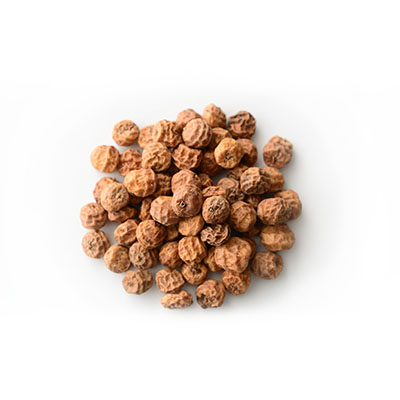
Tiger nuts should be checked for general condition, cleanliness, appropriate drying, foreign matter, visible damage, and other characteristics specified by the buyer.
Where required, additional inspection or testing can be arranged according to the buyer’s specifications and destination requirements.
3. Control Moisture Levels
Moisture is an important consideration when exporting dried agricultural products.
Excessive moisture can contribute to mould development, deterioration, unpleasant odours, and reduced shelf stability during storage and transportation.
Palmadex pays attention to moisture requirements during product preparation and can work toward the moisture specification agreed with the buyer.
4. Check for Foreign Matter
Foreign matter can reduce the quality and commercial value of a tiger nut shipment.
Before packaging, the product should be cleaned and sorted to reduce unwanted materials such as dirt, stones, plant debris, damaged materials, and other impurities.
The final tolerance should be established according to the buyer’s specification and destination requirements.
5. Consider Food Safety Requirements
For tiger nuts intended for human consumption, food safety requirements are particularly important.
Buyers should determine the applicable requirements in the destination market, including any requirements relating to contamination, hygiene, testing, packaging, labeling, or documentation.
Palmadex considers these requirements during sourcing and export preparation so that the shipment can be prepared according to the agreed commercial and regulatory conditions.
6. Obtain Applicable Phytosanitary Documentation
Agricultural products may be subject to phytosanitary requirements when entering certain international markets.
Depending on the destination country and applicable regulations, a phytosanitary certificate or other plant-health documentation may be required.
Palmadex can coordinate applicable export documentation according to the shipment and destination requirements rather than assuming that the same documents apply to every market.
7. Prepare Certificates of Origin
International buyers may require documentation confirming the origin of the agricultural product.
A certificate of origin can help establish that the tiger nuts originate from Nigeria and may also support customs and import procedures where required.
The specific format and issuing requirements should be confirmed for the destination market and transaction.
8. Prepare Commercial Export Documents

Accurate commercial documentation is essential for international shipments.
Depending on the transaction, documentation may include:
- Commercial invoice
- Packing list
- Certificate of origin
- Phytosanitary certificate where applicable
- Inspection or quality documents where required
- Shipping documents
- Other documents requested by the buyer or destination authorities
Correct information across documents helps reduce avoidable discrepancies during customs clearance.
9. Confirm Packaging and Labeling
Packaging should protect the tiger nuts throughout handling, storage, and transportation.
Palmadex can prepare tiger nuts in 25kg or 50kg PP bags, or according to the buyer’s preferred packaging specification.
Labels should be prepared according to the buyer’s requirements and applicable destination regulations. Product name, origin, net weight, batch information, handling details, and other required information should be verified before shipment.
10. Complete Final Pre-Shipment Verification
Before the shipment leaves Nigeria, a final review helps ensure that the order matches the agreed requirements.
The final verification can cover:
- Product quantity
- Product quality
- Moisture requirements
- Foreign matter
- Packaging condition
- Labeling
- Documentation
- Shipment details
- Buyer instructions
This final stage provides an additional opportunity to identify and resolve discrepancies before dispatch.
11. Coordinate Customs and Shipping Requirements
Export compliance does not end when the product is packaged.
Shipping arrangements, customs procedures, port requirements, freight documentation, and destination-country import conditions must also be considered.
Palmadex coordinates export preparation and shipment arrangements to help ensure that the physical product and supporting documents move through the process together.
12. Keep Destination-Country Requirements in Focus
One of the most important compliance principles is that requirements can vary between countries.
A tiger nut shipment intended for one market may have different documentation, labeling, inspection, or food safety requirements from a shipment destined for another market.
Therefore, Palmadex works with buyers to establish destination-specific requirements before finalizing shipment preparations.
Common Tiger Nut Export Compliance Mistakes
International buyers and suppliers should avoid several common mistakes:
- Failing to confirm product specifications before sourcing
- Ignoring moisture requirements
- Using unsuitable packaging
- Providing inconsistent information across documents
- Failing to check destination-country requirements
- Leaving documentation until the last minute
- Shipping products without adequate quality verification
- Overlooking labeling requirements
- Failing to coordinate logistics with export documentation
Avoiding these problems can make the export process more predictable and efficient.
Why Palmadex Supports Compliance-Focused Exporting
Palmadex understands that international buyers need more than access to Nigerian agricultural products. They need a structured sourcing and export process.
By combining responsible sourcing, product preparation, quality checks, documentation coordination, packaging, and logistics support, Palmadex helps buyers approach Nigerian tiger nut imports with greater confidence.
The goal is to ensure that each shipment is prepared around the buyer’s requirements and applicable export and import conditions.
Key Takeaway
A successful Nigerian tiger nut export requires attention to both product quality and regulatory compliance. Buyers should confirm specifications, verify quality, control moisture, reduce foreign matter, use suitable packaging, prepare accurate documentation, and understand destination-country requirements.
Palmadex provides sourcing and export coordination designed to help international buyers navigate these stages more efficiently while maintaining focus on product quality and shipment requirements.
Nigerian Tiger Nut Export Specifications
- Product: Nigerian Tiger Nuts
- Type: Dried Tiger Nuts
- Grade: Export Grade
- Moisture: According to Buyer Specification
- Foreign Matter: Minimal, According to Buyer Specification
- Size: According to Buyer Specification
- Packaging: 25kg, 50kg PP Bags, or Buyer Specification
- Origin: Nigeria
- Applications: Tiger Nut Milk, Beverages, Snacks, Flour Production, Food Processing, Health Food Products
Contact Us Today
Are you planning to import Nigerian tiger nuts and need a reliable export partner?
Palmadex can support your sourcing requirements with quality-focused procurement, product preparation, export documentation coordination, suitable packaging, and shipment planning.
Whether you are sourcing tiger nuts for beverage production, tiger nut milk, snacks, flour, food processing, or other commercial applications, our team can discuss your quantity, specifications, packaging, destination, and documentation requirements.
Contact Us Today to discuss your Nigerian tiger nut import requirements and begin your sourcing process with Palmadex.
Emails: [email protected] | [email protected]
Phone/WhatsApp: +2348066579079