Cassia Tora is widely used across pharmaceutical, cosmetic, animal feed, and industrial applications, making quality consistency essential for international buyers. However, sourcing export-grade Cassia Tora from Nigeria requires strict control over maturity, cleanliness, moisture levels, and documentation. At Palmadex, we follow a structured quality assurance system designed to meet global buyer specifications and regulatory requirements. In this Q&A, our export team explains how Palmadex ensures premium Nigerian Cassia Tora quality from sourcing to shipment.
Q&A: Palmadex Cassia Tora Quality Assurance
1. Where does Palmadex source its Cassia Tora in Nigeria?
Palmadex sources Cassia Tora from selected producing regions in Nigeria where soil conditions and harvesting cycles support optimal seed development. We work directly with trusted local collectors and aggregators to maintain consistent supply and traceability.
2. How does Palmadex ensure proper seed maturity?
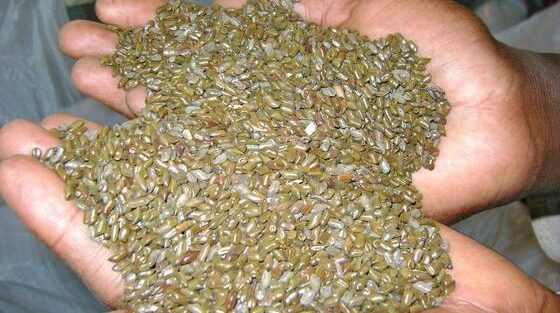
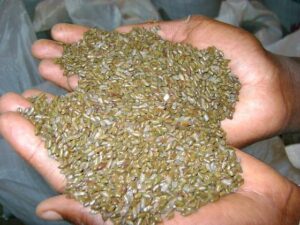
Only fully matured Cassia Tora seeds are accepted. Our field teams verify harvest timing and reject immature or shriveled seeds that may affect quality, oil content, or downstream processing performance.
3. What cleaning standards are applied before export?
Cassia Tora undergoes multi-stage cleaning to remove stones, dust, husks, and foreign matter. This ensures the seeds meet buyer cleanliness specifications and reduces rejection risks at destination ports.
4. How does Palmadex manage drying and moisture control?
Seeds are dried under controlled conditions to achieve export-safe moisture levels. Moisture testing is conducted to prevent mold growth, clumping, or deterioration during transit.
5. How is Cassia Tora graded for export?
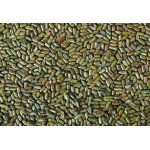
Palmadex grades Cassia Tora based on seed size uniformity, color consistency, cleanliness, and moisture content. Grading ensures buyers receive consistent quality across shipments.
6. What quality inspections are done before shipment?
Before loading, Palmadex conducts final inspections covering product appearance, moisture levels, packaging integrity, labeling accuracy, and batch traceability.
7. How does Palmadex guarantee export compliance for global markets?
All shipments are supported with complete export documentation, including phytosanitary certificates, fumigation certificates, certificates of origin, and inspection reports to ensure smooth customs clearance.
Conclusion
Exporting Cassia Tora from Nigeria requires more than availability—it demands strict quality control, proper drying, accurate grading, and full regulatory compliance. Palmadex’s structured quality assurance system ensures global buyers receive premium Nigerian Cassia Tora that meets international standards consistently and reliably.
Cassia Tora Export Specifications (Typical)
Product: Cassia Tora Seeds
Moisture Content: ≤ 10–12%
Foreign Matter: ≤ 1%
Seed Condition: Fully matured, clean
Color: Natural brown
Packaging: PP bags or buyer-specified packaging
Origin: Nigeria
Shelf Life: Up to 12 months under proper storage
Contact Us Today
For Cassia Tora export inquiries from Nigeria:
Emails: import@palmadex.com | palmadexgis@mail.com
Phone/WhatsApp: +2348066579079