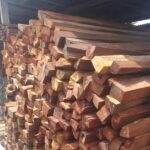
Eku wood is a durable hardwood widely used in construction, furniture manufacturing, and industrial applications. However, exporting Eku wood from Nigeria involves several technical and regulatory challenges. Buyers often face issues such as improper moisture levels, cracking, inconsistent grading, compliance risks, and shipment delays.
Palmadex addresses these challenges through disciplined sourcing, strict quality control, and coordinated logistics management. In this guide, we explain the most common Eku wood export challenges and how Palmadex solves them for international buyers.
1. How Does Palmadex Control Moisture Levels?
Moisture control is essential in timber export. Excess moisture can cause warping, fungal growth, and structural instability.
Palmadex applies controlled air-drying or kiln-drying methods based on buyer requirements. Additionally, we monitor moisture levels throughout the seasoning process. As a result, the timber remains stable during shipment and installation.
2. How Are Cracking and Splitting Prevented?
Cracking often occurs when timber dries too quickly or experiences internal stress.
Palmadex uses gradual seasoning techniques to reduce tension within the wood. Furthermore, we handle timber carefully during storage and transport. Consequently, the risk of cracking and splitting is minimized.
3. How Does Palmadex Maintain Grading Consistency?
Inconsistent grading can affect usability and project planning.
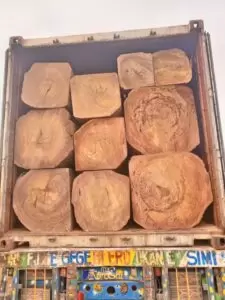
Palmadex applies standardized grading systems based on dimensions, moisture content, grain quality, and allowable defects. Moreover, we inspect each batch before shipment. Therefore, buyers receive consistent and reliable timber quality.
4. How Are Compliance Risks Managed?
Timber exports require compliance with forestry regulations and international trade standards.
Palmadex ensures that all Eku wood is legally sourced and properly documented. In addition, we prepare export permits, certificates of origin, phytosanitary certificates, and inspection reports. As a result, buyers avoid customs issues and regulatory delays.
5. How Are Shipment Delays Reduced?
Shipment delays can disrupt construction schedules and increase operational costs.
Palmadex coordinates production schedules, container loading, and export documentation in advance. Additionally, we monitor shipment progress and provide regular updates. Consequently, deliveries remain timely and predictable.
6. How Does Palmadex Handle Bulk Orders?
Large-volume orders require careful coordination to maintain quality consistency.
Palmadex organizes timber into traceable batches while maintaining uniform grading standards. As a result, buyers receive consistent Eku wood across all shipment volumes.
7. How Do Buyers Benefit from Palmadex Solutions?
By addressing export challenges proactively, Palmadex provides a reliable and efficient timber supply chain.
Buyers benefit from reduced risk, consistent quality, and dependable delivery. Furthermore, transparent communication supports long-term business relationships.
Conclusion
Exporting Eku wood requires careful control of moisture, cracking, grading, compliance, and logistics. Without proper management, these challenges can affect timber performance and project timelines.
Palmadex solves these issues through structured quality control, disciplined processing, and efficient export coordination. As a result, buyers receive high-quality Nigerian Eku wood with reliable performance and delivery.
Eku Wood Export Specifications (Typical)
Product: Eku Wood (Logs or Sawn Timber)
Moisture Content: 12–20% (depending on specification)
Dimensions: As per buyer requirements
Grade: Export grade (as specified)
Defects: Minimal, within acceptable tolerance
Packaging: Bundled and containerized
Origin: Nigeria
Durability Class: Suitable for structural and industrial applications
Contact Us Today
Emails: [email protected] | [email protected]
Phone/WhatsApp: +2348066579079